Why Reachype?
Running marketing shouldn't mean translating four screens into each other.
Reading the numbers, deciding what to do about them and making it are three separate jobs today. Reachype puts all three in one workspace — and writes down why it is recommending what it recommends.
No card. You start on trial credits.
How it goes today
The problem isn't missing tools. It's the distance between them.
Most teams already run five or six. The time goes on none of them being able to see the others.
-
The numbers live in four panels
Meta says one thing, Google says another, the spreadsheet says a third. Working out which one is right takes longer than the decision does.
-
Deciding what to make
The report gets read and never becomes a plan. This week's content ends up being whatever last week's was.
-
Making it means moving files
A brief is written, an agency is waited on, a file goes from design to edit. The distance between an idea and a post is measured in days.
Five things change
Each one has its own page, and each page has the screen that backs the claim up.
You are still guessing which channel is working
See what is working before you spend more.
Your ad, app and store accounts feed the same dashboard, so what each channel returned reads off one screen.
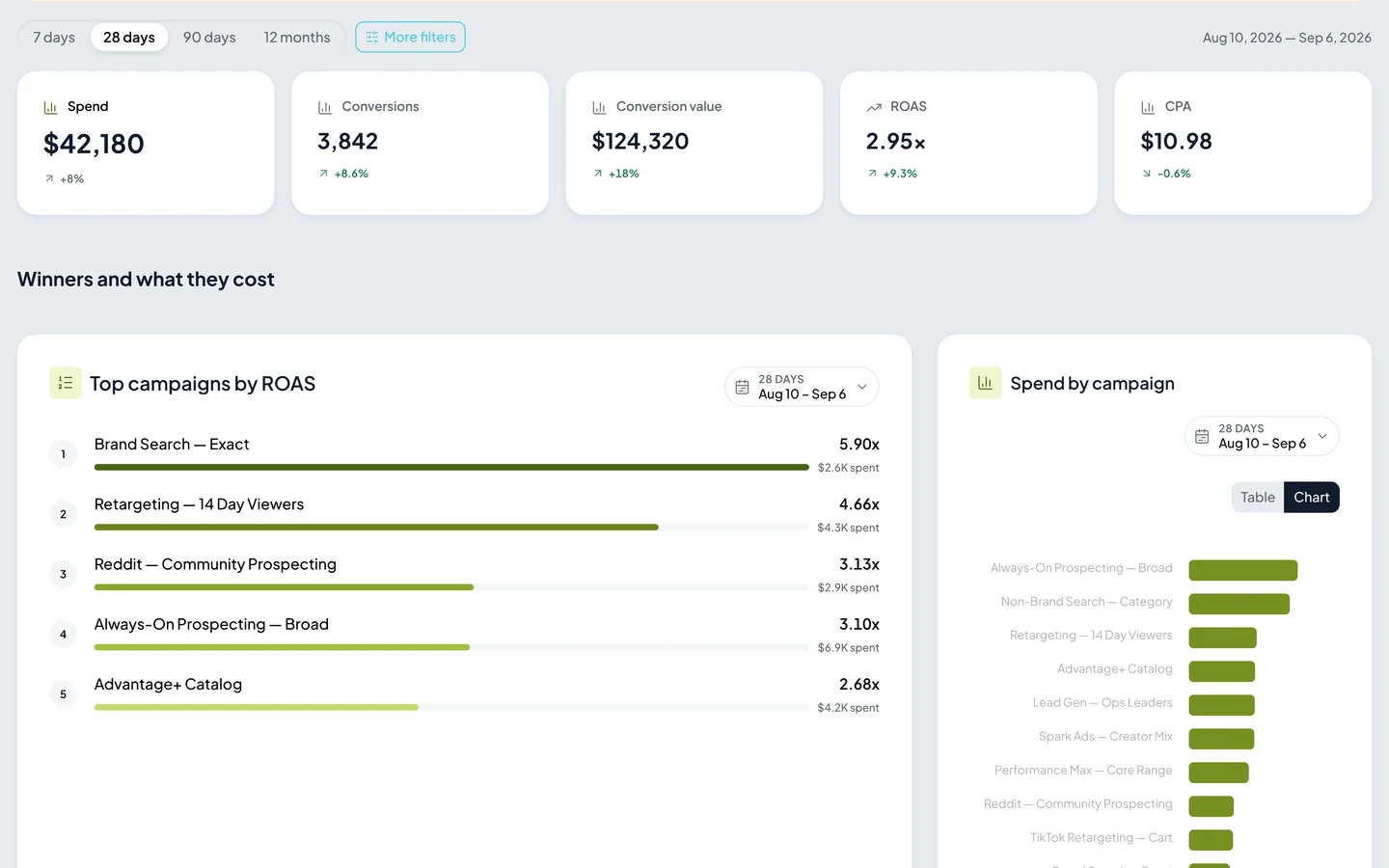
- Meta, Google and TikTok ads side by side
- A block it cannot fill is hidden with its reason — never zeroed
- A day nobody measured stays a gap, not a zero
Building the competitor list by hand is half a day
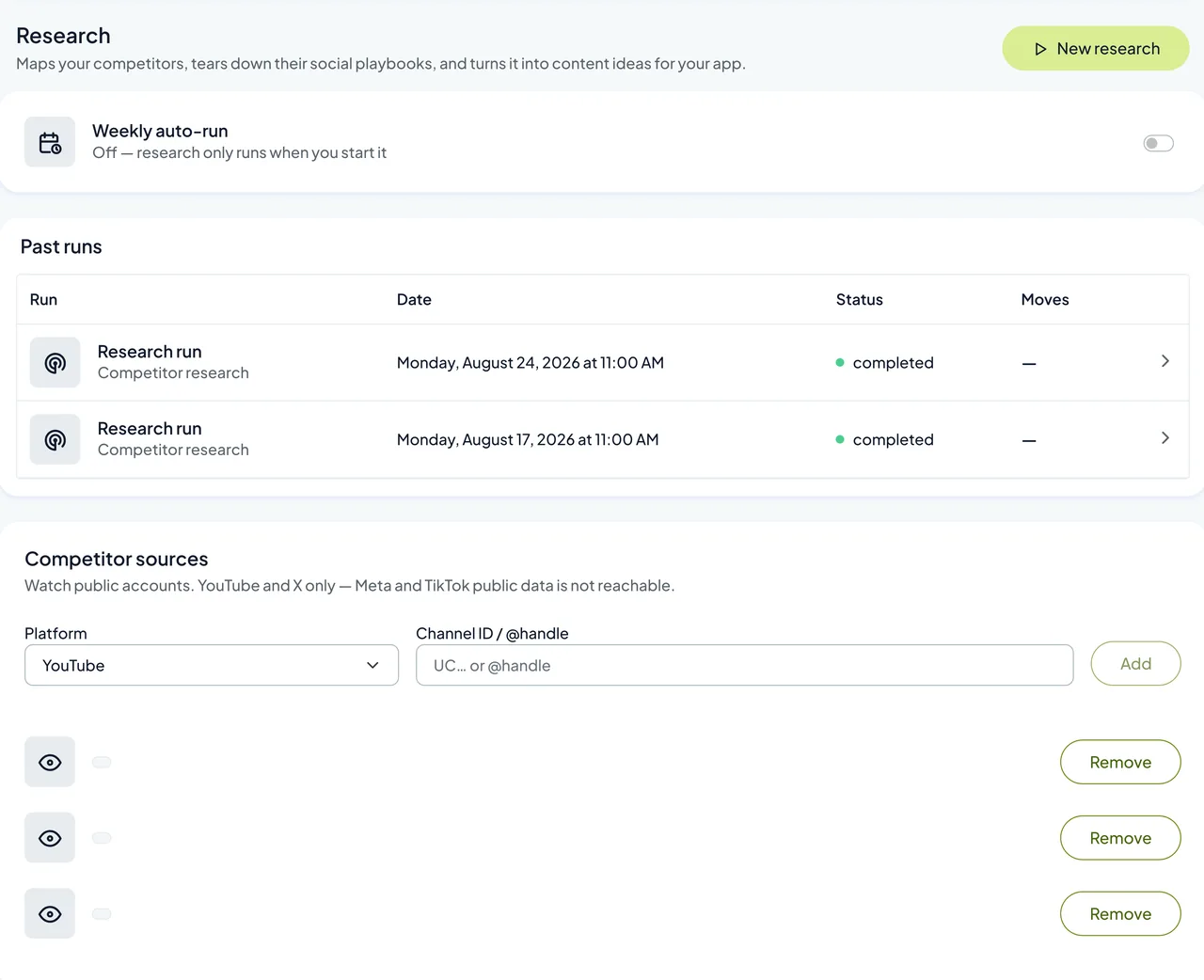
Competitor research shouldn't ask you for the list.
You write down what you sell; the run finds who you are up against.
- Discovery is the run's job, not yours
- It can re-run itself every week if you want it to
- The report ends by telling you what to do
A strategy document gets written and never opened again
A plan should produce moves, not paragraphs.
Every item reads "we saw this signal, do this", and the reason it is on the plan is written on the plan.
- 01 Weekly cadence per channel comes from one ratio
- 02 Each move carries its own reasoning
- 03 Measured results come back to the plan as evidence
Rewriting the same tone notes into every brief
Describe your brand once; everything comes out in that voice.
The brand book has twelve core questions, and the images, carousels, video scenes and plan made afterwards read that definition.
- Palette and typeface preferences go into production
- Phrases to avoid are part of the definition too
- An image you don't like is fixed in the same conversation
Five tools and a file trail between an idea and a post
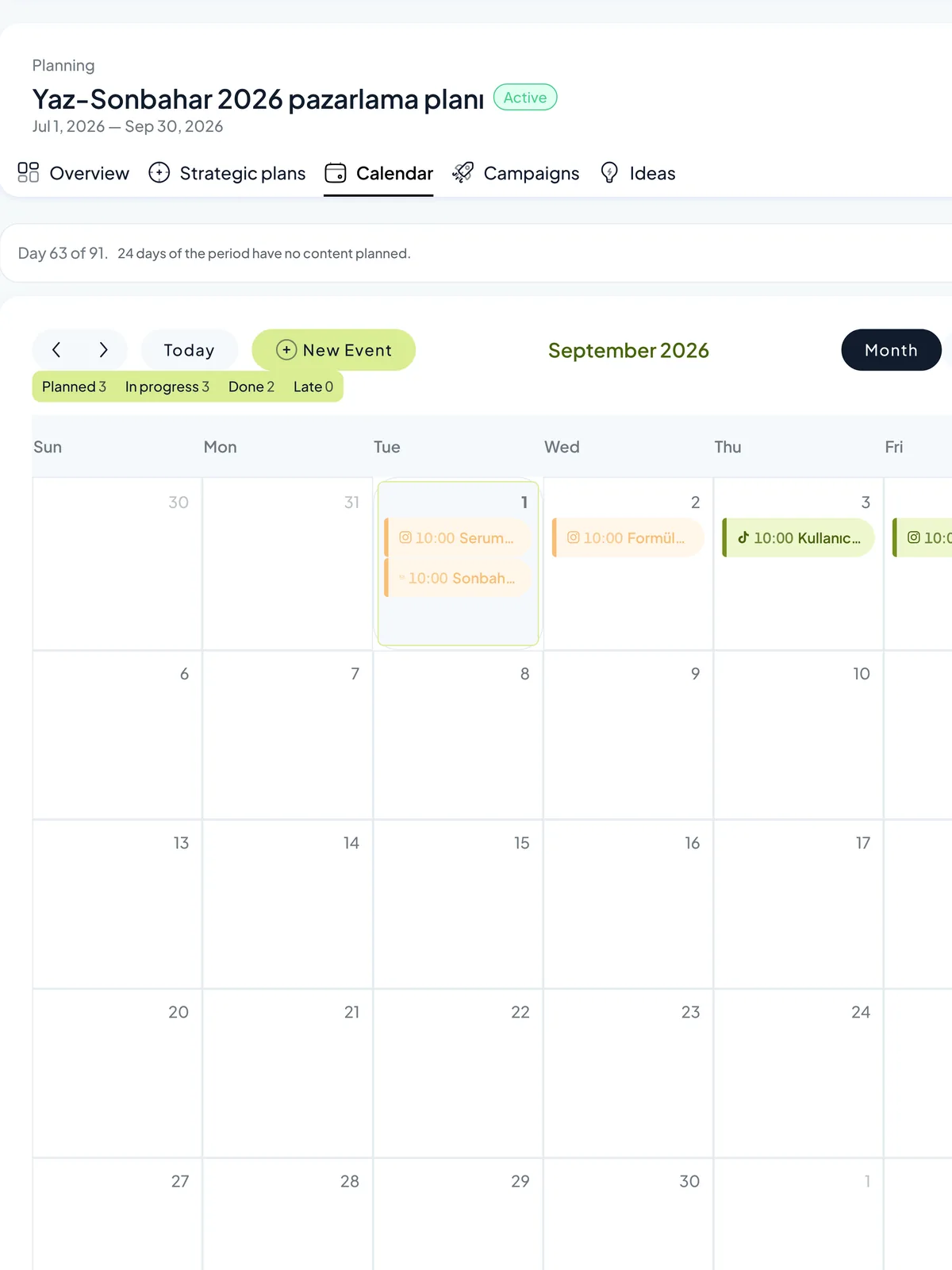
One window, from production to the calendar.
Images, video, the canvas, the plan and the calendar are one workspace.
- Everything produced lands in the same library
- The calendar fills from the plan itself
- Days with nothing on them are named above the calendar
Start by deciding the next campaign.
Opening an account takes a few minutes. Once the brand book is filled in enough, your project opens and you can build your first plan.
Trial credits come with the account.